

Building ResilIence in Kids: sAy "Yes" to Taking Risks!
Do you remember when you were a kid, and you were sent outside by your parents saying, “Go play outside and don’t come back inside until it’s dark out”? You were left to your own devices to entertain yourself. This often led to exploration and adventure, engaging your imagination outside. You may have rolled your body down hills or pretended to be a superhero. Maybe your next-door neighbor friend joined you? I remember these experiences, and to this day I am still an avid nature enthusiast and enjoy being in nature, but I’m a little less of a risk-taker than I once was!
It’s important for our children to build resilience in this ever-changing and sometimes challenging world. Giving our kids opportunities to take “safe risks” is a key component to building their resilience. There has been research into the benefits of being outside in nature and given different opportunities for risky play. Let’s first define risky play!
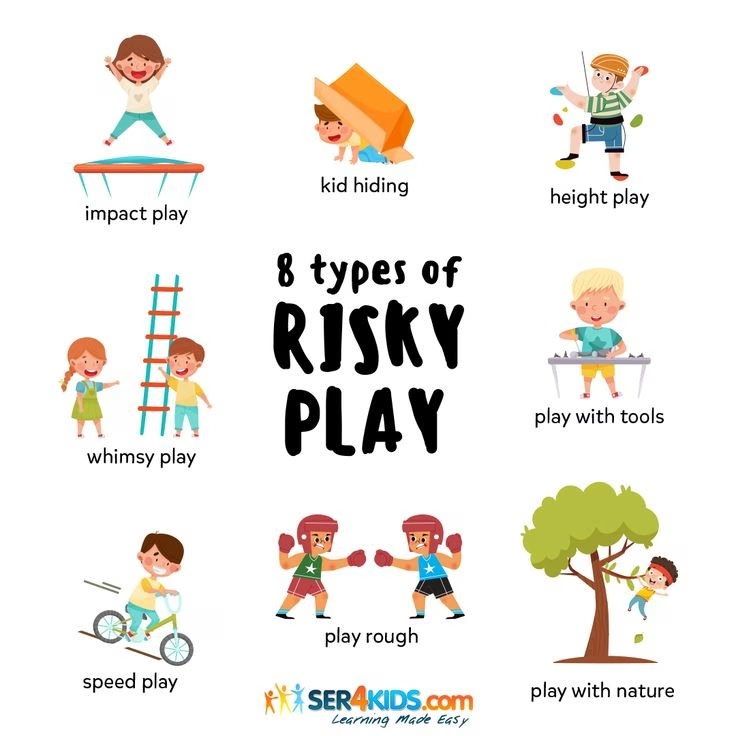
Risky play is a part of children’s play that involves thrilling experiences and elements of risk. It can include climbing, sliding, balancing, jumping, hanging, rolling, or using potentially dangerous tools. Studies have defined 6 categories of risky play. They are: Great Heights, Dangerous Tools, Rapid Speeds, Dangerous Elements, Rough and Tumble, Disappearing or Getting Lost. (Ellen Beate Hansen Sandseter) For more information visit 6 Categories of Risky Play.
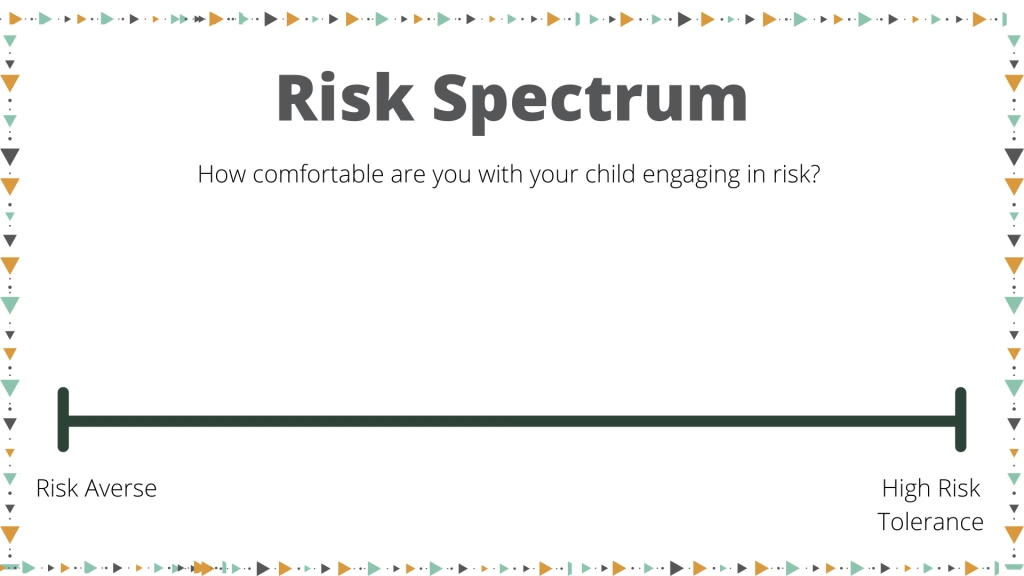
While we encourage our children to explore the area of taking risks, it’s important for you, as a parent, to reflect upon how you feel about offering these opportunities. The way you approach, react and respond to your child during these experiences, will influence how your child will approach these situations in the future.
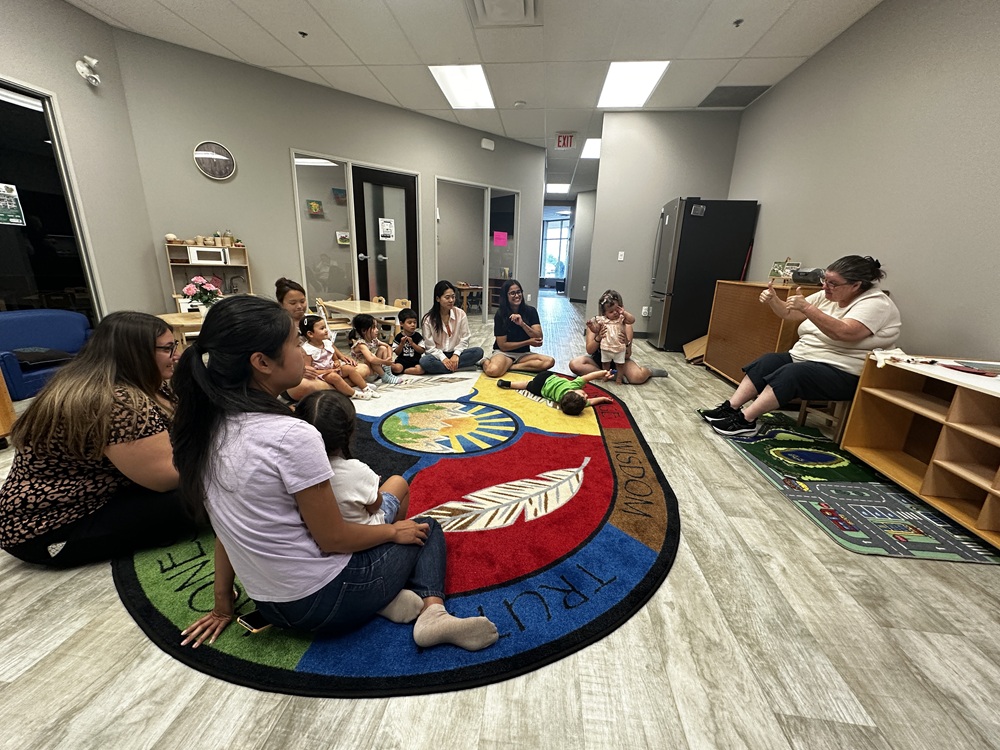
All learning can have an element of risk. So, what can we do as parents and educators? Let’s show our kids how to be careful and explain special things they might need when they’re curious and exploring. One example from an EarlyON Child and Family Centre occurs upon arrival: Parents are often surprised that we have real hammers and screwdrivers with nails and screws in the centre. With the families, facilitators discuss the potential risk of injury. Facilitators also provide safety glasses, gloves, and offer the opportunity to explore the tools while providing support and supervision.
This is the process of learning! Notice how proud children are when they succeed and pay attention to how you feel. It is just as exhilarating for us as it is for the children! Isn’t that what this is all about? I say YES!
Children naturally crave experiences to test limits, manage fear, and develop physical literacy. Developing these skills ultimately reduces injury risks. It is essential for learning to navigate uncertainty and build emotional regulation.
The Pedagogy of How Does Learning Happen believes and recognizes that children are competent, capable, and curious learners. My hope is that you, as parents, will agree and consider the importance of providing these opportunities. Whether it’s out at the park, hiking in a forest, or jumping in puddles: encourage your child to challenge themself and make the adjustments required. An example during a hike may be stepping away to provide more space when your child picks up stick. This allows them space to explore and pretend it is something special; maybe a sword, a wand, or an umbrella. Remember to coach and guide, providing your child with problem-solving opportunities. This will foster their sense of self and build their capacity for resilience.
SAY YES TO RISKY PLAY!
References
Explorations Early Learning. (2020, August). Ellen Sandseter’s 6 categories of risky play. Playvolution HQ. Based on research by Ellen Beate Hansen Sandseter.
Gray, Peter. “Risky Play: Why Children Love It and Need It.” Psychology Today, 22 Apr. 2014, https://www.psychologytoday.com/us/blog/freedom-learn/201404/risky-play-why-children-love-it-and-need-it.
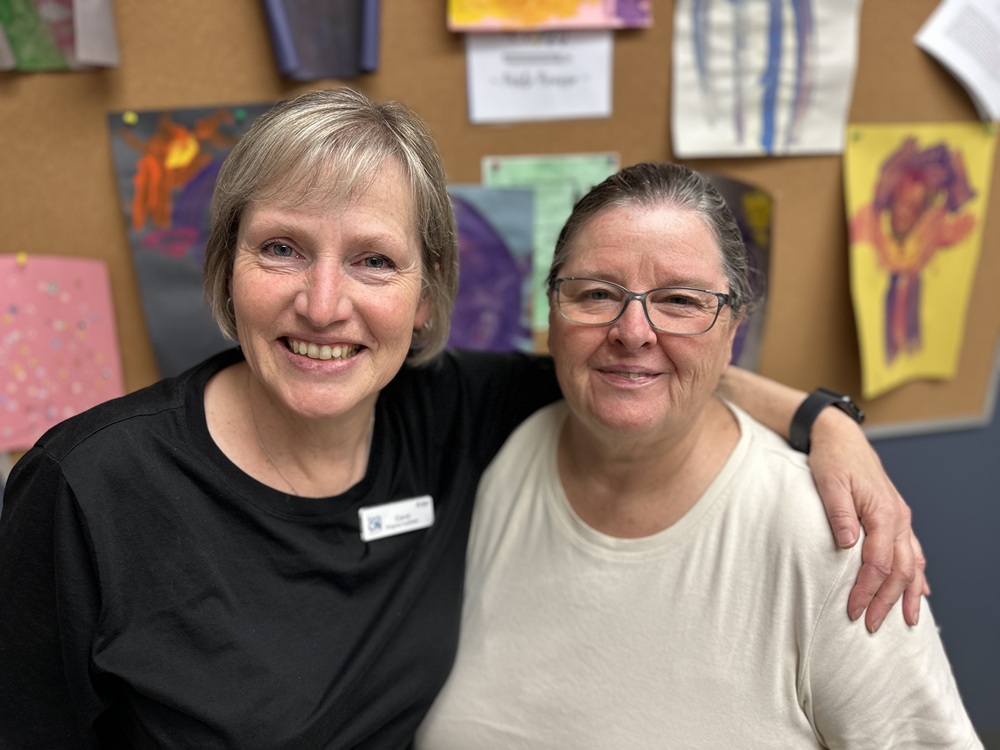
Written by: Kim Marion, EarlyON Facilitator