

Fine Motor Play: A Hands-On Adventure!
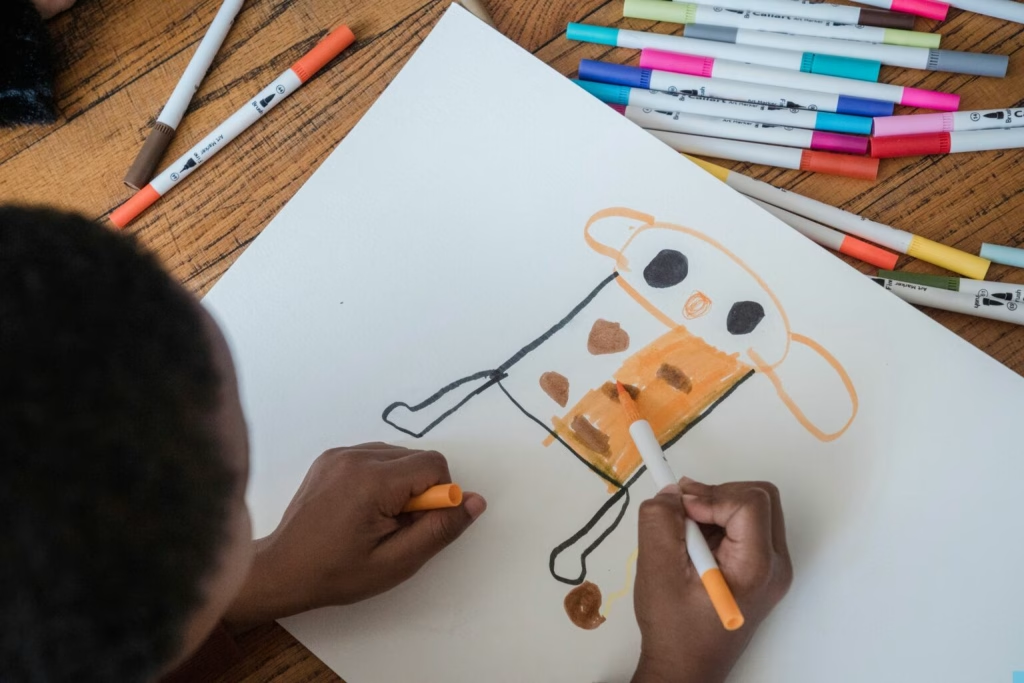
Fine motor skills; the coordination of small muscles in the hands, fingers and wrists, are important for everyday actions such as holding a crayon, manipulating a small block or turning the pages in a book. Developing fine motor control gives children the building blocks for independence and prepares them for school.
Research shows that fine motor skills predict social behavior and stronger executive function (the ability to pay attention, follow directions and stay on task) which are essential for thriving in the school environment. Intervention based research supports integrating fine motor, play based activities into early childhood education. When educators and parents embed fine motor and sensory activity centres into day to day play there can be significant improvements in kindergarten readiness.
Everyday examples of fine motor activities and the benefits:
Fine motor play does not require fancy or inexpensive materials. Simple, everyday activities such as letting a toddler pour water or sand or rice from one container to another, using spoons, stringing beads, tearing or folding paper, stacking small blocks, drawing with crayons, or using child safe scissors can all strengthen the small muscles and coordination needed for little tasks. As children master these tasks, they gain independence in being able to feed themselves, dress, manipulate classroom objects or hold a pencil. At the same time, these activities build eye-hand coordination, bilateral coordination (using both hands together) precision and control. These skills will support later tasks like cutting, writing and drawing.
Look around your local EarlyON centre and your home, think about all the ways you can embed fine motor play into every day routines:
Simple daily routines like getting dressed (zipping jackets, buttons, pulling on socks), helping with meals (using child safe utensils, pouring, spreading butter or jam), helping to fold laundry or set the table can all become fine motor practice opportunities.
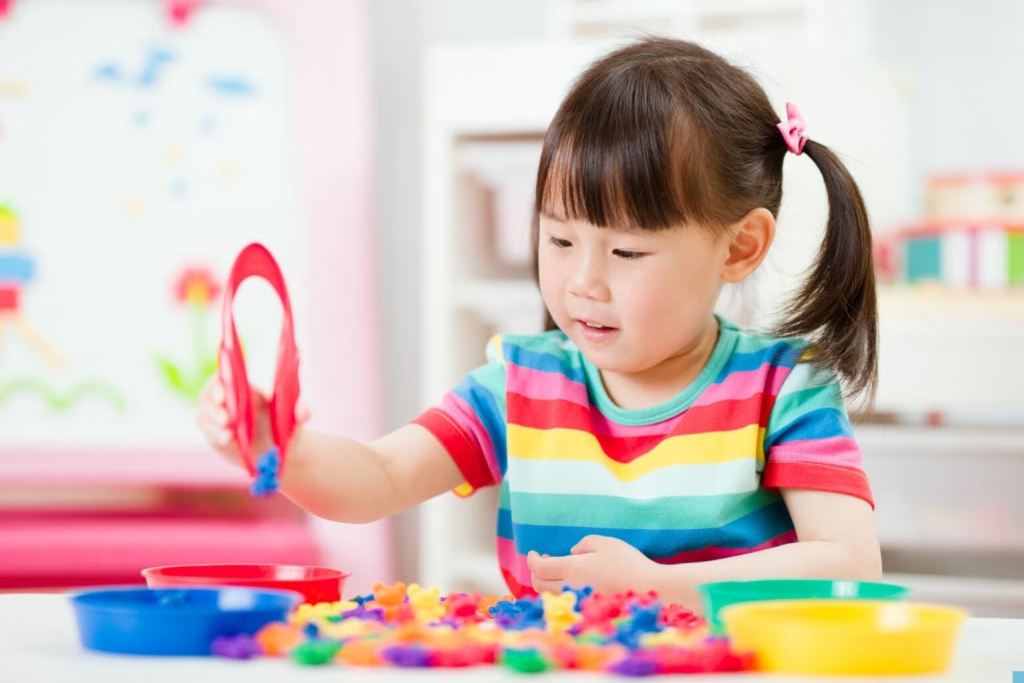
Play opportunities like squishing and molding playdough, using tongs to sort small objects, peeling and placing stickers, stringing beads, cutting paper or drawing, colouring and gluing. Keep it low pressure and child-led. Let children explore at their own pace, choosing what interests them and offer activities regularly in short bursts rather than one long session. This helps your child to build confidence and ultimately independence while also having fun.
Now you know why you see so many pom poms and tongs at EarlyON centres! 😊
Check in with your program facilitator, we have lots of ideas!
Resources:
Focus Therapy: Everyday activities to build fine-motor skills for toddlers and preschoolers: Fort Myers Occupational Therapy Tips
Healthline: Fine motor skills for toddlers and preschoolers
Cameron, C. E., et al: “Fine Motor Skills and Executive Function Both Contribute to Academic Achievement.”
Zero to Three: Baby to Big Kid